Sunday, August 10, 2014

Allin Punchay

A good day


It's Sunday coming on sundown, and there are six men, one field over, behind three pair bulls, tilling with hand-carved wooden plows. Further up in the hills they're doing the same thing without animals, using chaqitacllas, wooden foot plows, same as the Inkas did.

It feels good to watch them and noodle on the guitar, it has been a tough few days. They are working their fields on a Sunday but I don't think they take that amiss.


They're about to plant maiz, what we call corn and natives call sara. It come in all colors and, in the hills, is grown without chemicals of any kind. Likely enough that field there. Monsanto will probably come by to sue them pretty soon. 


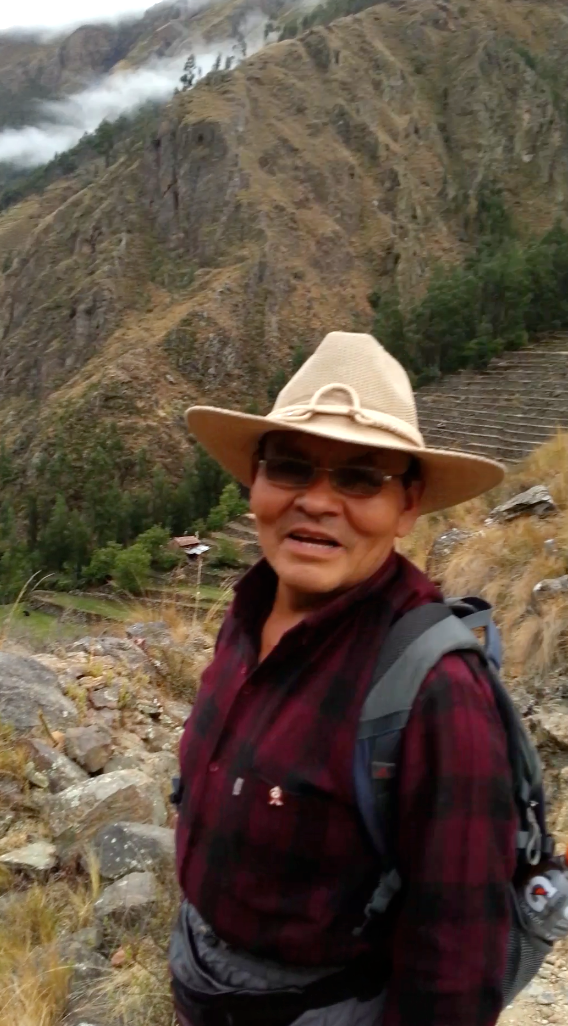
The field belongs to my landlady, Ricardina's, aunt. Yesterday her man, Ivan, also pure blood of the land, took me on a long hike on Bandolista mountain to the ruins at Pumamarka, a profound and mysterious pre-inca site. I'd heard of it, seen it on Googlemaps satview, but was amazed at its reality. I won't try to describe it. The web had nothing to offer but stub paragraphs and tourist reviews; I'd really like to debrief some Andeanist on that.


Afterward Ricardina met us at his Co-Mother's place back up the valley - he and she, the co-madre, are god parents to the same boy - ate trout and mixed veggies also from further back in the mountains in Huilloq, where the people dress to live in clothes I had thought were costumes for tourists. They don't give a fart about tourists, they farm for a living. And, well, sell some of those brilliant red ponchos to support their school.


We carried off a heavy sack of short, black, cobs of corn for Ricardina to cook to mush on an open fire in the back yard. They have cell phones and TV and the appurtenances of a modern kitchen but that's still how she renders her corn.


Okay. For a minute there I thought I wasn't going to make it here. It looked like the jaws of the beast called A Foreign Land were going to bite down on me. There was this interlinked crossfire of failures with my cell, internet, and banks - I couldn't call my banks because my cell wouldn't get international service, I couldn't communicate with the banks or the internet/cell carrier because my internet went dark, and both my debit cards went bad on me - one ate by the ATM, one refused my PIN. And I needed all of those to get my medical plan changed to work out-of-country. And it was cold dark and wet.

In Communist Avocado (out of contact) in a land where you don't speak the language worth a damn, and your money is all some thousands of miles away. Is how it felt.


Took a few days but it looks like that's all worked out. Shows you how prey you are to circumstance though, as an expat. Your support system is more vulnerable. I thought I might have to bail, and there are a lot of things yet to do and places yet to go. Anyway, I like this town. A lot.


Tuesday, August 5, 2014

Tunupa


The Colcas


Christ for a napalm strike. Whoomp, no more chapel, no more fiesta of the Virgen de Copacabana, no more hybrid Andean-Mexican racket. Third night in a row, sounds like its coming from the yard below, really, I thought it was for the first few hours. But it's from Bandolista, on the hillside pointed directly at me from about two hundred meters across the fields. Are the residents of that place all in it together, or do some of them pray for F-14s to burn that place into eternal silence?

You never know from whence cometh the serpent in the Garden of Eden. Usually, though, the snake's not this big; but then, most gardens aren't this Edenic, either. 


Bandolista from Pumamarka Wasi

It was still a pretty good day though - I climbed the path up onto the southeast face of Apu Pinkyulluna thinking maybe I'd make up the old Inka storehouses, the colcas, that I was told are called Tunupa. I'd gone that way before, in December, but chickened out at a narrow place in the trail. I have fear of heights. This time I got past that, up to the first little set of ruins, but above that the trail bottlenecked into a just about imperceptible track up onto the ragged black rock and low cactus. "Another day," I told myself.

I got my first acrophobia on a mountainside in the Washington Cascades in maybe 1972. I was sitting on this bulge of rock looking into a gorge when of a sudden I got this rush of sensation that I was going to just pop off that stone into the void. And I was going to do it on purpose. Panic struck and I gingerly backed off onto a safe trail.

So you get this panic sometimes, on, say, a roof. If it was set on the ground you wouldn't worry about sliding off, because the physics says you wouldn't. But there's some impulse inside you that you just don't trust. 


It's irrational, a sickness. Other people, whole families, just bound up those trails - hell, right there a guy with his wife and a baby on his back went by like they were in their living room.

But the trick to that is, get accustomed to it. Get used to it, that's all. I figured that would more or less work maybe in a few months if I kept at it. Because there are signs that it does work.

So I go back down the trail, and I am a little less skittish; and come to a fork going up to another set of wrecked stone buildings, I've been there before, I'm not tired, so I go up that way, not, when in motion, looking down, according to prescribed SOPs in mountain hiking, and I find I'm a little more comfortable. This ruin has a bunch of stone derelicts going up the mountain, linked by dirt paths, sometimes with scree, sometimes broken rock, often nice smooth dirt. I keep going up, past where I was last time, happy that the flashes of panic have gone away, that I can do it, by gosh, and get up past the ruins to where people have built little cairns, apachitas, stacks of rock to show you've got to where you're going, or that you've passed a peak. Fine, enough for me, now to go back down.

But I notice a trail going across the sheer face of the mountain and around a curve, in the direction of Tunupa. It's a good, flat, solid trail, and it might go there. I'll give it a try, to the curve at least. 

It goes there; at the end, it drops fast through rough rock, but I can handle it - earlier in the day it would have stopped me, but I am becoming accustomed. I get to Tunupa - really fine structures, good Inka work, scientifically designed to channel wind-flow, handle temperature extremes, foul weather, and preserve the contents for future use - the wind flow was tested by Jean Pierre Protzen with interesting results. 

I get there, check it out, take that low road that scared me earlier back down. Had to hunker down some on that bottleneck, but no panic. 

Didn't have to wait for another day. That was good. Got over a hump with the fear of heights. That was better. The rest of the day was pretty good too. Until this hell from across the valley.

9:45 and they're not done yet. Can't read, can't focus on pirated tv episodes, can't pound on the floor or go downstairs confront the perps, it's beyond my control, it's a whole town.

But wait: silence? Is it over? Is it too much to hope? Is there a ten o'clock cutoff?

Ahhhh. But they've done this before tonight; gone quiet for a minute or so, then come back louder than before. 

10:07 - it's kind of over. Now just some dude noodling an electric bass into the mike, but more muffled. Like everybody's left the party but these two or three drunks still muttering at each other. Just a .22 behind one ear each, tap tap tap, and it'd be okay. Peace.

10:14. Fuck. It's back in force. On a Tuesday night.

10:40. Stoic hate. It's all I've got. This will pass, but getting past that panic, that'll last.

It went quiet at 1:30 am.

Sunday, August 3, 2014

Wasiy


It is August of 2014, and I have a house in Ollantaytambo.The lease is a year. I have a Peruvian cell phone and internet carrier, Claro, and have met a bunch of people, one two of whom have the potential to become actual friends. The place envelopes me, it is interesting, impressive, beautiful - screw looking up synonyms - and the people are kind. The basic food is  quinoa soup, chicken, rice, potato. There are variations, and it's all fine with me, I can happily live on this, interleaved with this and that now and then. I breakfast on bread rolls and "fresh milk" that comes in a box. I like it. 


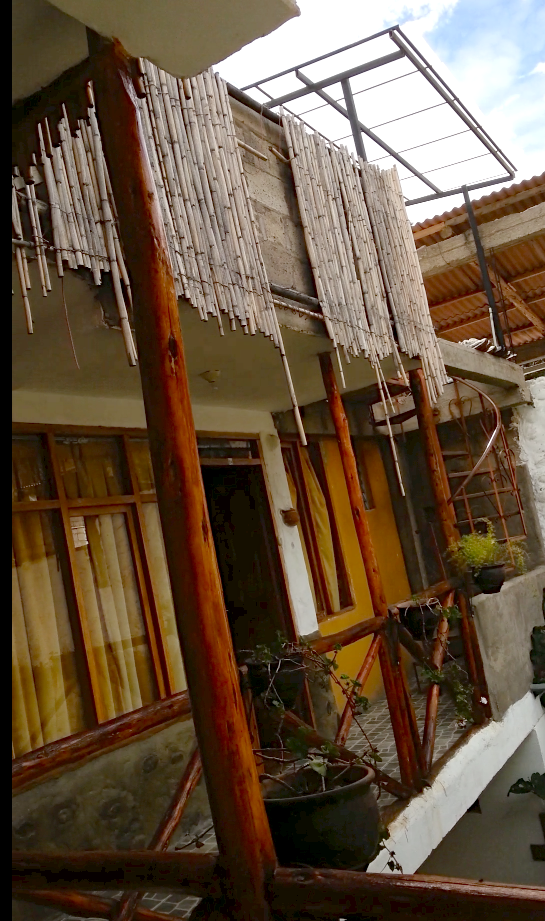
My house (wasiy) is a little over a click from the center of town, has two floors, two bedrooms, two baths, a kitchen, a dining room, and a big covered deck, a balcón. It runs $250 US per month. The hot shower isn't so hot so far and may never be, but heck, we're not in Vacaville anymore, Toto. It has electricity and fast internet. A mountain river runs by across the camino.


About three years back in Berkeley I composed a desiderata of what I wanted in a place to live; true dark, silence, living water, stars, and a dirt road to run on. Now I have them all. And Inkas, Inkas up the waz, Jack.


I checked out of Hotel California and of US. Maybe to return, but not for a while; not until I know what it's like to be planted somewhere else. I did it. 


I'm not bored, I'm not angry, I'm not afraid, not of much; I look forward to every morning. 


I've outlived most of my enemies


I've outrun much of my misery


I've outgrown some of my stupidity


Mary you should'a stayed


That's a song  that came to me a few months ago, came to stay.


That peak in the pic is Pinkyulluna; the locals call it Apu Pinkyulluna; Apu means Lord. The photo is taken from Apu Bandolista, on which the main ruins reside, Temple Hill. I met a man who has worked twenty years "restoring" Inka sites for the National Institute of Culture, or Instituto de Cultura Nacional, or INC, pronounced as E-NSA. He says there are, I think, 28 official Archeological Zones in Ollantaytambo, more than two hundred separate sites. He has a daughter who is an accredited archaeologist, also working for the INC. They offer to squire me around some of these places, show me what's real and what's not. I think I'll take them up on it when they finish working on their new apartment building in a couple weeks. I'd sure like to know.


The escarpment to the right is three distinct Apus along its length. It took me ten days and a few interrogations to find them out and verify, but I did. 


Now I know I'm not all that likable past a point, being a know-it-all, showoff, elitist, egoist, and whatever you're thinking that I don't know about, but I know some Quechua (Runasimi) words and I really like the Incas, and people around here appreciate that, so my long isolation has melted away somewhat. Here people live mostly in houses sharing walls on both sides, in extended families, and in a town of 2000, know one another at least by sight, so one of the first things they ask is, do you have a wife? Kids? Family? And when they find out I don't, it fascinates them. They call it "solito," and they use the word a lot around me. A day or two ago I was in a room with three women none of whom gave the impression of being especially literate, so when they asked me yet again if I was really single, I said, "Soy más solito que Gabriel Marquez." More alone than Gabriel Marquez. They all laughed, no pause. He wrote A Hundred Years of Solitude."


It's Sunday. The landlady, Ricardina, invited me to lunch today with some of her amigas, girlfriends. I thought maybe she was matchmaking, but no, it was a family/good friends get-together to which I was courteously invited. There was a lot of food. I shouldn't have had that second bowl of soup, I didn't know there was so much more coming, but I did my plate fair justice. Sure won't go out for Cena tonight though.


Now they are downstairs being fairly loud - it's only 5:52 so I'm not worried, they'll pipe down by eight - and playing Andean music, pitched so high it seems almost Chinese. They are good people. One, the patriarch of the gathering, is a Quechua first-language native of many generations; I asked, six centuries? Which would take you back to founding of this town by Pachacuti Inka, the most awesome of all the Inkas - don't laugh, he'd make you piss your pants with a glance - and he said, possibly. And it is possible. Not a hair on his chin, he's all indio.


He gave to me an Inka greeting which I'd once heard but failed to record, it goes:


Ama suhua

Ama llulla
Ama quellu
Jinullutag Q'ampus

I won't rob you
I won't lie to you

I won't be lazy
You do the same

And you know what? The way the Inkas lived, they could do it.


Someday maybe I'll tell you about Katty, KAH-tee. She runs the hostal, Chaska Wasi, at which I landed, and finessed me into this house; many expats have left this town unable to find a place to set up. And she won't lie to you (though things'll take a little longer than her optimism allows), she won't rob you (no qualification), she won't be lazy (no qualification). You...well, do what you want to do.


I'm the highest red roof in the left center. That's Apu Pinkyulluna behind.


Thursday, December 26, 2013

Taste Familiarity Paradigm

"Taste Familiarity Paradigm" is a term researchers use when experimenting with getting kids to eat their vegetables. One approach gave children vegetables to eat; another showed them pictures of vegetables.

I never found a comfortable source of nutrition in Peru this trip; everything tasted strange - maybe it was the terroir, the differences in the soil, the fertilizers, the techniques, the strains of plant and animal - or maybe just that as their tastes differ, so does their cuisine. But they don't know how to do a burger, a pizza, or a sandwich, and their own dishes take some getting used to.


The scrambled eggs were okay. I liked their fruit juices, though they differed from here. Everything else I would try, then look further along for something else. 


Of course, I'm old now, and used to what I know. Even Canadian food seems strange to me - and, of course, it is a little different; a box of Wheat Thins Original bought in Port Angeles, Washington is a slightly different product than Wheat Thins Original bought just across the border in Victoria, British Columbia. The texture and flavor differ. I never did find a good box of crackers in BC. One thing the US does is good crackers. Our rednecks aren't bad either.


So I was happy to get back to my little tornado bait residence and see that I still had a box of Cheezits in the cupboard. 


It's going take a while for this trip to settle in, to internalize, to process. It's good to be home, the familiar is a deep comfort. But it was beautiful there, if strangely so, and interesting. The bit about contempt has its truth too; traveling the US got boring a long time back, and it was more pleasurable then, before the population doubled and created the universal strip mall. Peru has changed too, in the ten years since I was last there; it has become much more proud of its Inca heritage - maybe for mainly economic reasons, the tourists put their money down on Machu Picchu, and maybe from their own internal emergence. 


By the time I left I had been through moments of boredom and loneliness that I wouldn't feel here because I jack into this computer screen and the actual terroir fades back into a gray haze; there I would be forced to take some kind of action. It would feel very different to have my own place there. 


And, for a foodie, the markets are stunning.


So goes this account, except for the pix I hope I may now include. 

Saturday, December 21, 2013

Capac Raymi

Great Festival of the Summer Solstice

It occurred to me that in this town of two thousand there is no significant income gap. There are the laborers with hand tools and a load on their backs, and the owners of the stores and lodgings with their own cars, but walk the streets and the houses are all pretty much the same mud brick and field stone - none of them rise above the others, boasting of HDTV, jacuzzis, roombas, or a staff of servants. 

There is a little cluster of houses visible on a hillside north of town, though, and I thought the well-to-do might live there, so I took a morning walk. A very pretty one into greenery, sunup, and birdsong.


It started out cobblestone, turned to concrete, then to dirt road, and stayed dirt past the little neighborhood, which turned out to be the same as the rest, a campesino vecinidad. It was a pleasant walk so I kept on; and around a bend, at the very top of the valley, was the finca, the estate.


I counted, in the distance, 28 windows along the front face of light chocolate stucco, and there were two or three more tiled roofs and other sides; it isn't an apartment complex or a hotel, it is a residence, set against lush green mountain slopes and overlooking prosperous fields of maize and grain. The gate, a double wooden door in neat stone pylons, faced the dirt road and opened to a grassy stone track a couple hundred meters long to a twin gate at the manor itself. I walked the mud road on by above; there is no other access.


Some great owner lives there. They get in and out by a grassy trail, unless they have a helipad up there. The surrounding scenery is the most idyllic, the most edenic I've seen in Peru - a wider range of forest flora, an arcadian paradise.


So there is your gap; off by itself, one family. If I lived here long enough someone would tell me who they are.


Today is the Inca celebration of the summer solstice, Capac Raymi, the Great Festival. It was their biggest holiday, the state gave everybody five days off with free food, drink, and dazzling ceremony. Modern Peru pretty much ignores this fiesta in favor of the winter solstice, Inti Raymi, into which they pour a lot of phony Inca tourist stuff - I can spot like four or five really obvious blunders in their production, the worst of which is the Inca himself in all his long-haired bravissimo. The Incas cut their hair above their ears; it was part of the symbology of royalty, and showed off their huge golden earplugs, another badge of superiority. They should know that.

But on this day, the youth of the empire became adults, and earned their grownup names. The boys competed in a grueling footrace through the highlands outside Cusco. And throughout the Tawantinsuyu, the Four Regions, the common folk would would be treated to a golden and feathered panoply of the might of the empire and the glory of the gods.


Actually, they got about a hundred days a year off at government expense; about what we do. Plus entertainment and refreshments. They could envy only the French.


Now I'll go out and see if this town gives any recognition to Capac Raymi. And, I spied some ruins to the east yet to see.


Nope, oblivious. Took a walk along a trail to the last of the ruins I know about, and selfie in front of a handsome gateway that may and may not have been originally inca - the INC, Instituto Nacional de Cultura I think I told you, is so good at faking inca stuff it gets hard to tell. In the plaza a long-hair local tried with an obsequious air not entirely consonant with the somewhat truculent "excuse me, can I pass" in the square a few minutes earlier, to sell me some CDs of authentic Andean music. I asked him in spanish how many notes in the inca system of music and he said, wait, let me remember, but he could't; answer: five. And no stringed instruments. Well, I'll get over it. That Peru has not made a national holiday of my cumpleaños.


Time now to take photos for local color, not to record archaeology. Of people. I'm shy about that though, I don't know how they feel about it. I remember french youths on the metro mocking my cell cam with some hostility. But people are what make a good picture. That will be my mission for the next couple days. I have seen so many I'd like to memorialize. Though, in general, I don't like to suffocate immediate experience with the camera. It is always a relief when I feel I've done with data collection and can just breathe in the vicinity.


A fair amount of day left, and it's warm now. I've got my strength back, what there is of it, and probably more, I'm doing a lot of walking compared to normal life. I have just projected myself into each of you, into what you may be doing now, and I deeply wish you well.


Later...


The manor house. Forget it. 


Long ago in Ecuador I saw two young guys on a bench silently watching the Marias, the young girls in maid's uniforms going to work; two cute ones passed, and one of the guys said to the other, "Pura fantasma." Pure fantasy.


Well, that's what my take on the big house was; pure fantasy. I took my laptop to the smart son, with googlemaps zoomed to Ollantaytambo, showed him a satview of that big estate, and learned that it is an unfinished hotel. That's all. Not a great family hacienda. Just a story I told myself. Like most of life.


*Note to spanish speakers: it should read, pura fantasia," pure fantasy, but what I heard was pura fantasma so that's what I'll report


Friday, December 20, 2013

Cusi Rimac

Happy Talk

Inti is shining, the sky is blue, strange birds sing, the curse is lifted. The middle-school kids in their blue-and-white striped futbol suits or below-the-knee gray uniform skirts or slacks flock by on the terrace above to the collegio past the cemetery - beyond that, the way turns to a cow path through the fields, then a river-stone trail that turns to an actual stream every now and then, past the cornfields to the ruins of Q'ellu Racay, the old emperor's river retreat. They go by in threes or fours, girl and girl and girl, boy and boy and boy, carrying soccer balls or book bags, or in twos or alone; sometimes boy and girl. All dark hair bronze skin, the boys with good hair, the girls with Inca noses and small chins. Laughing or head down. Just like us, I guess.

The curse is lifted - inexplicably, the Verizon customer service chat choices weren't grayed out today, and I got Amy, who informed me that I need to add a plus and a one to my international calls. I dwell in darkness. Then, for the first time, Capital One let me log in to my online banking. I swear every previous attempt failed, saying I couldn't do it from here. I paid Verizon. And the sun shines and the birds sing and children are still unknowing.


Oh don't be cynical. You can know and still be happy.


Maybe I'll take a 2.5 Sol bus to Yucay today, see what's left of Sayri Tupac's palace. The post title: Cusi = happy; Rimac = speaker. Happy talk. 


Three of the interesting people I've encountered - all men about my age. 


In Pisac, I admired the work of a jeweler in the artisan market, stuck my head in his shop to ask if any of it was his work, figuring he was selling various artists' pieces on consignment - there were hundreds of pieces in a variety of styles. Turns out it was all his.


He is the son of a Spanish ambassador to the US. They had a servant who worked in silver and stone, who told the five-year-old Ricci (Placido Quillo Zegarra), "I know you will be an intellectual, but you must learn to do something with your hands."  Ricci learned from him, and from others, and though he graduated with an advanced degree in economics and practiced that profession in London, this is what he does.


In 1965 he and a Canadian friend bought motorcycles - his a BMW - and rode from New Mexico to Alaska. He passed through San Francisco in '66, grew his hair long, smoked pot. Hey, we were there then doing that...did we pass on the street? Probably. 


He lists places he saw in the US - Massachusetts, Indianapolis, DC, New Orleans, LA - he liked John Dos Passos, Whitman, Joplin, Morrison...loves New York. When in London he roamed Europe. He's in Peru now because the economy tanked in Spain and the food's no good in Ecuador. He misses culture here, the people are illiterate and drunk. 


His craftsmanship is superb and artistry beautiful and stylistically varied. He laughs a lot. 

Now compare with Miguel Chavez of Urubamba.


Walking down the dirt road from my hostel to find some soup and from a side street comes an imposing figure, tall, in all black and red, with gray mustache and goatee, walking imperious; I give him a look, he returns a cold glance as I pass. 


And yet; not ten steps past and he's at my elbow, asking where I’m from in Spanish. When I admit my nationality, he switches to accented English. He says he’s a pilot, I ask him what kind of plane, he takes out his wallet and shows me a photographs, a Cessna 120 and 160. I tell him I once flew to Ecuador in a Cessna 210. He invites me to sit in the square and talk, another old bored guy I think, he says he's about to participate in a hotel opening in Yucay, Hotel Sayri Tupac; I beg off, am searching for soup.


Half an hour later I haven’t found any soup so I think I’ll go the square and find that old guy, Miguel Chavez, but I run into him sooner, and he says we will now resolve all your problems. He fixes that one, anyway, he knows a place nearby where the senora will make you anything you want.


The man is a story teller; his life is like the guy in Gary Jenning's Aztec, a full life, except maybe more so. He went to Brooklyn at 16 to become, for his father, a Rockerfeller - instead he became a socialist. He didn't like the way certain people were treated. He heard being a pilot was hard but everybody respected a pilot and gave them money and sex, so he went to San Jose and learned to fly, working for a Del Monte cannery for $25/hour to do so. He piloted for a while. Then he heard that being an actor in Hollywood was hard and cool, so he went there, became an extra, hung out with guys like Dean Martin and Frank Sinatra and Anthony Quinn, who captained a collection of Spanish-speaking actors. Turns out Miguel looked like Sal Mineo (girls would want to stroke him on the street) so he got to be Sal Mineo’s double, did his death in Exodus. 

Later there was a socialist coup in Peru so he joined it, and the government sent him to Prague to become an economist, but when he graduated there was a rightist government so he had to stay in Germany for 20 years, where he married and had two kids.


Okay, so both of these guys are educated as economists and did time in New York and California. Miguel, though, is traveling in more glamorous circles and getting mixed up in history. If he's fabricating, he's smooth and a quick thinker, because I am introducing the topics much of the time, and he's right on them. For instance, I bring up the Sendero Luminoso in Peru, and Tupamaru, two bothersome leftist guerrilla outfits. Without a pause, he tells me that while he is still in Germany, because of his weight as a socialist, Tupamaru wants him to join them; he has conditions, however, they can’t meet - for one, stop fighting with Sendero Luminoso. Sendero also wants him to join them, but again, he needs them to clean up their act a bit; none of this infighting. I've got this skeptical little grin but he's going blithely on; he doesn't miss anything, though; he's got a sharp eye.


Now, these days, besides being an advisor for this new hotel, he’s a prime mover in a project outside of Yucay and in the mountains above Ollantaytambo to bring spinning wheels to the indians. He’s got a whole stack of photos - he’d just picked them up when I encountered him - of him with inca women and drop spindles and new spinning wheels. He has just introduced the spinning wheel to the andes. A couple years ago he was watching women spin and decided it was an inefficient process, so he (keyboard finger action) checked around until he found some people who make spinning wheels in New Zealand. He negotiates, they’ll give him a deal, 15 of them for $20k. He sends proposals to the New Zealand government, and a couple years later they get back to him with yes, they’ll pay the tab. Then he finds spinning wheel teachers in Germany and gets them here. He is also getting woodworkers here to make them. He tells me to youtube “pisac textiles.” Sure enough, there are three videos, two of which have him, with longer hair and a bigger beard, but yeah, that's him, in 2008, the Cuyo Grande project.


As we eat - I add some breaded chicken to my soup, buy him a beer - we are talking a lot of topics, largely political, since we're in Peru and he has this history. Bringing spinning wheels and communist insurgents together, suddenly we're in Canada in the 70's.

Now, he says, in 1975 the Canadian indians got together and founded the Council of First Nations, with their own parliament, recognized by the canadian government and the UN. They then invited aborigines from all over the world to join them and after discussion they decided to make revolution without arms. This is what our socialist friend Miguel Chavez is doing with the spinning wheels (the class struggle in Peru now is between the mestizos and the indians); making unarmed revolution.


Well, that's not exactly how Wikipedia tells the story, but history looks different when you're in it - I've been in history and remembered it my own way. 


Miguel's tales portray a man to whom other men come for his power. But then, he is impressive.


Still. Check out this story.There was a moment when Sendero was poised to take Lima by force, the rich oppressors in the center outnumbered by the poor on the edges, all waiting for sendero to send arms...I’ve seen that center and those barrios; that's how it is...and at the same time an election is coming up. One faction wants to take arms while the iron is hot, and another to see how the election works out. But both Sendero and Tupamaru are barred from running candidates in the election; so who do they call on to represent their cause? They call on Miguel, who is technically not a member, to stand. While they are still arguing (Miguel declined) El Chino, Fujimoto, gets elected and kills them all. Miguel says, “and I’m sitting here.” 


Sitting pretty because when Germany reunited there weren’t enough jobs for the east german youth so germany offered pensions - at full wage - to some old guys to open up jobs for the poor. So Miguel is getting good pay for life for whatever work he was doing to support himself and his family in unified Germany.


Now all those historical figures begging Miguel to be their leader seems pretty far-fetched, but then, Miguel’s son just published a book, in German, which he wanted to show me, about the Sendero Luminoso. Got his PhD with it. I asked if he was in it, and he says, “a little bit.”


When I get back I'll watch Exodus - it's on my hard drive - to see Sal Mineo die.


One more story. I'm in Urubamba nosing around private lands to try to see where Wayna Capac's estate, Quispihuanca, used to lie - trespassing around the east side, clambering over a dip in a stone fence and through some little fields, to get a look at what I thought was the living area and the courtyard with the sacred white rock. Through the eucalyptus foliage I spy motion, a campesino there, little guy in dirty clothes doing something to a newly turned field, and I turn back, I don't want a conflict. Then I stop myself. Why not give it a try? 


I approach slowly, not to spook him, and ask in Spanish if I can pass through his property to the ruins. He regards me suspiciously, leans on his digging tool, and begins a series of questions - where from, what state, what name, what living, what am I doing here, and as I answer, apparently to his satisfaction, he comes closer and begins to smile. Pretty soon he's giving me a thorough and informed tour of the site. I had been totally disoriented, what I thought was the front was the back. I would not have figured all that out for myself, or been sure I was right if I had theorized correctly. I left satisfied with the exploration; I even found the sacred white rock, in the other direction, west, preserved by a little white rope. 


The man’s name is Julio Guevarra, inheritor of that property through many generations of Spaniards - it sounded like back to the conquistadores, but he’d be richer if it went that far. His daughter works the desk of my hostel (kind of a spoiled valley girl to my eye) and her fiance does the same for the morning shift. He is about my age, spry, climbs up over walls like a kid, in faded soiled peasant clothes, landowner and farmer, a friend to the stranger who has the cortesa to ask.


Okay. Thanks for listening. Permission to skip the boring parts is always yours. Life is improved with the lifting of the curse, whatever it consisted, of, so I think I'll put on some pants and see what's happening in the plaza. Get a strawberry jugo.


Wednesday, December 18, 2013

Yana Hamut'a

Black Thoughts

It's a fine day in the Andes - cool in the mornings, hot before noon, chilly in the afternoon, temperate in the evening. The light is sublime. I discovered a new ruin, not on any tours, a riverside retreat, they speculate, of the greatest of the Sapa Incas, the most influential personality known to the precolumbian new world; Pachacuti, Earth-Changer. I sat, foot dangling, on a corner of wall in the perfect noon, Urubamba river rush blending with the burble of the fountains running through this abandoned resort - the incas loved their stone, and they loved living water. There was a two-story tower with windows north and south to watch the river and the channelled waters both. They call the place Q'ellu Racay. My Spanish-Quechua dictionary tells me "q'ellu" is "yellow," but "racay" I cannot pin down. Well, Quechan orthography is going through changes these days, so spelling is nebulous - "rakay" means poultry, "rakiy" means divorce, and "raqay" is hut, or ruined house. You decide. Oh, you didn't pick "Golden Divorce," did you?


I found the place searching "Jean Pierre Protzen," who wrote the definitive work on the inca architecture in Ollantaytambo. Every now and then I prompted myself to buy it, but the cheapest copy available online is $220 US, and I lacked the nerve. It would have been worth it.

I'd upload photos, but the wifi would just say "loading one file" all night until I gave up; and, to you, it would just look like the foundations of some Norman farmhouse; fieldstone walls. You pretty much have to be an andeanist to get some of these ruins, it is an acquired taste. I think this site was intentionally humble in its construction, a quiet place for the great man to go to be alone and hear the silence behind the rushing water. Other Inca work will communicate to you, when I get back to a strong connection.


Which is today's theme: Yana Hamut'a: Black Thoughts.


Recognizing the sometimes sugary tone of this record, please note that the flip side, the dark side, of all this is not ignored. The inca artefacts will pall, I can't play with them all the time; sometimes everything I've gained coming here will seem like less than everything I've left behind. The people don't really like you. Did I say this already? And there are inconveniences...

Verizon has stranded me here with no international capability - I can't call out of Peru. They didn't tell me this would happen when I had them set me up with data down here; it didn't happen this way in Australia or France. But the grind is, the real betrayal is, there is no way to contact them to fix anything. Not by phone, not by email, not by web interface. Every avenue shuts down when it sees where I am. I could write them a letter; that's it. And I'm moving too fast for a reply.

Well, I could find a number and call on a local phone, maybe? That occurred to me today, but it wouldn't make me feel much better, and getting that to happen in this hostel wouldn't be fun. See below.

I owe Verizon for two month's service, but I can't pay, because my online banking service has done the same thing - it closes all approaches when it sees that I'm out of the country - there is no solution by web. I can't reach them.

Ah well, next time I'll know better. But they should make some simple email link available, both of them.

I said the people won't really like you, you are a stranger, an intruder. Of course, that's not always true; some of the locals do warm to you. Here, in this albergue, it's kind of mixed and iffy.

I locked myself out of my room - what an idiot - which caused the management some inconvenience. I berate myself for that. But then, you'd think they'd have a protocol in place for such an event.

Instead, the owner doesn't have any contingency plan for keys locked in the room - there's a cloth sack of about 100 unidentified random keys, and he didn't even know where how to find that, his adolescent daughter had to dig it out of somewhere; then he tries each one, but in such a hurry that he can't be sure he really has tried it; then throws them into a pile so he can't tell which one's he's tried and which not. Now you know, every lock comes with at least two keys, and that's true here too, because I saw the boxes they come in. The guy is dumb as a fucking post. He brought a hammer and pliers as his solution, and was going to knock off the knob, until I pointed out to his more effective eldest son that the bathroom window - glass slats fixed to a lever - could be removed, and the son divined a way to remove four slats and drop the four-year-old younger son, Inti (runasimi for "sun;" the kids seemed to have inca names) through to open the door from the inside.

Attitudes toward me may have changed after that, but I'm not really sure he doesn't like me, his smile is too obligatory to tell. One of the two or three senoras, however, consistently ducks down the stairs when she sees me coming; another, the principal one, is helpful enough when she's around, which is sporadically. The elder son does seem to like and respect me, as far as I can tell, and he's the smart one. There are about six four-year-olds (more or less) and they seem to regard me with suspicion, which is the best measure of the general opinion; but I don't think they really care much about any of their gringo guests, they're much more into their own family life. This is off-season, so they may think it's not their job really until June or whenever, I don't know.


Okay, so I'll always be an outsider here, but so what, I was in Berkeley too, and more so in East Lansing, where I was raised, and being a foreigner is a plus to some folk here. I can live with that, I guess. And there are the expats, dug in somewhere here - I suspect that after a few months here, when I've proved myself, they'd seek me out and whisper me their secret password.

Black thoughts! Fuck Verizon, how can they do this to a customer, they know you are in a far place and that they are your means of communication, why don't they plan for that?

Why didn't I?

What if the bandwidth I've got here now is as good as it gets? And I can never upload jpgs?

Twice so far the electricity has gone out in three out of four provinces in the state of Cusco. That wouldn't happen under the Incas.

Stranger in a strange land, under the sheltering sky. What a gas. I saw some willowy woman with a Nefertiti profile in an ankle-length skirt turn down a soliciting guide and go alone up the stairs to the main ruins today. Later she passed a few yards away in the plaza; I sort of smiled. Maybe she smiled back, my vision allows for fantasies at that range. Maybe I'll run into her again. Everybody else around are in twos and threes, threes and fours, twenties and thirties. Her colors were good. I don't need to get laid, just to share some qualities.


In Q'ellu Racay I met a couple from Quito, Ecuador - she was Australian, he Peruvian; they were there for a "ceremony." I could talk inca with him, we speculated about the wall I was resting on - could it support both a roof and an access walk to the second-story punku, gateway? I learned how to pronounce kallanka. We would have kicked that stuff around for a while, but he had a ceremony to get to.


I'm going to post this and dist to my chosen few back home. That's all it's for. I'll clean up this post later.

Dusk. Venus is out in the southwest, has been every night lately; it's called Chaska Coyllur, the long hair star. It's female here too. It floats over a snaggle-tooth peak off in the distance; the Olympic Peninsula has its beauty but where I live, not like this.